The island was now in the awkward position of being occupied by both the US and the Soviet Union, and both nations didn't particularly want to part with their newfound possesion. Some considered the island too small to successfully pull off a a split down the middle, as had occured in Korea, but neither budged, and so for five years the two armies uncomfortably glared at eachother, trying their best to build a nation that they hoped would some day soon command all of the island. In honor of the then commander of the Soviet Pacific Fleet, the Soviets began to build Frolov in the northeastern forests of the island as the future administrative capital, as well as erecting a gulag on the shores of what is today called Lake Stanart, as a means of both furtheirng colonization of the island and ensuring Soviet political prisoners had nowhere to go if they tried to flee. The Americans resurrected Port J.J. Astor as simply Astor, committing to build an impressive port on the delta Astor was situated on. At the same time, GIs began to flock to the southeastern beaches of the island, christening their vacation settlement McKinley, after the President.
Tensions were simmering between 1945 and 1950, and they (nearly) exploded with the outbreak of the Korean War. The Americans were the first to intensify their troop commitment on the island, now being referred to by them as Grand Pacific Island. The Soviets quickly responded in kind, and several times over the course of the Korean War it looked as if things would escalate into real fighting, though thankfully these flashes remained as only isolated exchanges of gunfire across the informal border. Additionally, several times the order was passed down from high command for one army to push the other out of the island - the Soviets ordered it with the formation of the Busan pocket, and the Americans ordered it when UN troops reached the Chinese border - though commanders on the ground in both instances declined to follow the orders, fearful that open war between American and Soviet troops could spiral out of control quickly.

With the conclusion of the Korean War, both the Americans and the Soviets realized that the situation on the island was untenable, and in an attempt to demonstrate his foreign relations chops and thus solidify his control over the country in the wake of Stalin's death, Khrushchev reached out to the Americans through a backchannel to negotiate a settlement. At first, it appeared that both Khrushchev and Eisenhower weren't willing to come to an agreement, as both wanted the island firmly in their sphere, but after a few days of neogiation, the independent, neutral nation of Daikakuji was proclaimed in the Vladivostok Accords. Formally, the US and Soviet Armies withdrew completely from the island, and the people remaining would begin to form a government. In practice, however, this turned the war over the island from one of troops leering at eachother to one of spies trying to out-espionage eachother. Even as the Astor military base was closed, a number of Americans decided to stay on the island, growing enamored by it over their term of serivce. The Soviets experienced a similar effect, only enhanced by Khrushchev's decision to shutter the Litke Gulag and not permit the detainees to return to the Soviet Union - both solving the problem of the gulag's continued existence, and preventing potential threats to the Union by dangerous intellectuals. With approval from the Daikakujian government, the detainees decided to make the best of their new home, dismantling the gulag and converting it into a university that still operates to this day.
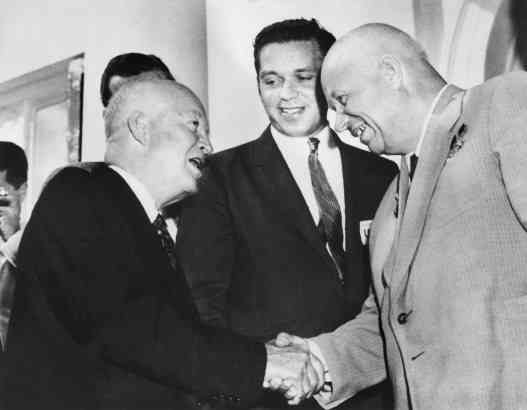
From 1953 to 1958 is commonly referred to as 'The Honeymoon Period', due to it's relative peace and calm as compared to the rest of the short history of Daikakuji's. In it, the First Constitutional Convention outlined a democratic republic modeled after the new Japanese government, with a 50 member House of Representatives forming the lower house, and a 25 member House of Councillors forming the upper house. Japanese-descending businessman Shiki Takemoto was nominated as the country's first Prime Minister, backed by both the majorly-American Freedom and Justice Party and the majorly-Soviet United Socialist Party. Shiki's own party, the Progress Association, managed to secure a decent plurality in both houses, and thusly he had a wide berth to enact his policies. Prime Minister Takemoto tried to walk a moderate path, levraging Daikakuji's neutral position to build a tourism industry that incoprorated both the Soviets and the Americans. Takemoto fever was already sweeping America, so it was a simple manner to subsidize the expansion of McKinley into a tourist destination that could capable of competing with Honolulu in a few decades. Takemoto also drew the republic closer to his ancestral home of Japan, securing investment funds to expand the ever-productive Daikakujian fishing industry as well as other industries. Even after the May Revoltuion, Takemoto has been praised as a competent leader who fostered as best he could a sense of Daikakujian nationhood, the spirit of which has been cited as a contributing factor to said Revolution.
From it's inception, the United Socialist Party was distinctly more liberal and democratic than the Soviet line, owing to being formed by formerly imprisoned Soviet dissidents. Chief amongst them was Damir Zubkov, writer and former Soviet bureaucrat exiled in the aftermath of the war for reformist tendencies. Zubkov led the reformist wing of the USP, stringing together a coalition of social democrats to trotskyists. Boris Pimenov - known popularly as Borya - former Red Army colonel before he retired after the signing of the Vladivostok Accords, led the hardliner wing of the party. The reformists had managed to decisively seize the reins of the party as it was ossifying in 1953, and Zubkov was beginning to grow a reputation amongst the people as a polite and earnest socialist who could be trusted with the office of Prime Minister - especially as Takemoto had indicated his intention to not serve more than one term as PM, to set a strong precedent for future leaders.
Borya knew from that start that Zubkov becoming Prime Minister would spell the end of hardliners for good - Zubkov had made no secret of wanting to pursue close collaboration with the Progress Association if the USP got a majority. The hardliners needed to act quickly if their dreams of Soviet communism coming to Daikakuji would be realized. Borya launched his plan at the yearly party convention in March, two months before the 1958 elections were slated to begin. While Zubkov was giving a speech in Litke University's Great Hall, Borya ordered the hardliners to slowly filter out before detonating an an explosive hidden under the seats. The tactic worked perfectly, and a large majority of the reformist faction, including Zubkov himself, were now dead. Calling up USP supporters across the island, Borya announced that the attack had been perpetrated by the Americans, to halt socialism in Daikakuji. Bands of communist militias charged the streets, sacking the government and forcing Prime Minister Takemoto to 'formally' cede control to the USP.
Even through the protests of the American government, the Japanese government, and even - covertly - the Soviet government, Borya refashioned the island into the Pacific Socialist Union, a one-party communist state organized along Soviet lines. The name spoke to his ambitions for the PSU to encompass more land than just Daikakuji, or as the Borya Government referred to it, South Kuril Island. Khrushchev, not wanting to be accused of contrevening the Accords and furthermore not very interested in the small island in the middle of the Pacific, had the Soviet Union maintain a respecful distance from the PSU. Investments and shipments came in, in exchange for a token military presence on the island that was mostly dedicated to manning a series of radar installations. Over time, Borya got more and more angered by the percieved lack of commitment to the island, and started to pivot instead to models like China and Albania.
Chief amongst this was Borya's military ambition. He put to work thousands of people in incredibly unsafe conditions to build a network of tunnels, shelters, and bunkers underneath Frolov to protect the island against the threat of foreign invasion, and to free up space in buildings above-ground. Frolov at large under his tenure would undergo significant expansion, filling out into a masterplanned brutalist cityscape that would house, feed, and provide work for hundreds of thousands of people. Or at least that was the plan, as by the time his government was toppled only about 60% of the plan was finished. The Frolov Plan left in it's wake a skyline of drab concrete, street after street without buildings, and a labrynthine mess underground. This is not to say that Borya's government was all bad. Under his tenure the island developed a strong domestic agricultural industry of food crops, weaning the island of the all-fish diet it had subsisted on for centuries, and a national railway system was completed that linked up major cities.
The Americans were content with lodging diplomatic protests in the initial wake of the Litke Putsch, but with the ascencion of Lyndon Johnson to the Presidency and the American eagle's focus on stopping communism in Asia, the government realized something needed to be done about the commies under their noses. And so, Presidency Johnson authorized the planning and execution of Operation Midnight Revue, an operation structured a lot like the failed Bay of Pigs Invasion four years prior. A coterie of more-American leaning exiles was recruited from their diaspora in Japan and Hawaii and given arms, ammunition, and a few boats to land on the shores with. Maxwell Matthews, a descendant of one of the original inhabitans of Port J.J. Astor, was picked to lead the operation. Matthews, or simply M, as he preferred to be known, was an eccentric character, who by some accounts convinced the CIA to pursue Midnight Revue, instead of the other way around. He was an intense braggart, always wanting to be the center of attention. He and his poirot moustache were instantly recognizable, in part thanks to his tenure as the police chief of Astor from 1952 to 1958. Once Borya ascended to power, he fled to Honolulu, comitting petty crimes to get by - until he got onto CIA payroll in 1964.
As Brezhnev came into his own in the USSR after the ousting of Khrushchev, it became clear to Borya and the rest of the Pacific Socialist Union that his deviances would no longer be tolerated. Brezhnev wanted the Soviet bloc to be unified, and that meant that sooner or later Borya would have to be replaced by someone more pliable. Growing increasingly paranoid, he declared in Februrary of 1965 that the PSU would dissassociate from the Soviet Union and embark on a path of autarky. The island's economy was, however, not equipped to handle the cessation of Soviet shipments, and from the spring onwards the state of the island began to quickly decline. This perfectly coincided with M's men executing Operation Midnight Revue and landing on a beach just north of Kinley. The people, having grown weary of Borya's rule, cautiously welcomed the exiles and watched suspiciously as they began to set up a new government, this time more in line with the American style of governance.
When M's men triumphed over the decaying Borya government, they immediately set about forming a state that would be amenable to American requests. A proposal was floated to reintegrate the island back into Japan, but it was denied - American officials thought they could better control the state if it was smaller. They stuck to some of the 1953 Constitution when crafting the Republic of Grand Pacific Island, but deviated in others, establishing a mixed parliamentary/presidential system. American planners hoped that it would solidify normalcy and continuity with the still-popular Honeymoon Period government, while at the same time signalling a graceful turn to the home of freedom, America. This, of course, was not what actually happened.
While M was swept into the Presidency and the Freedom and Justice Party had similar margins in the House of Representatives, and again in the elections of 1969 and 1973, the elections were widely critized by the public as being suspect. The United States certainly had a vested interest in retaining a firm grip over the island, as it was being used as a major stopping point for troops heading in and out of Vietnam. During the peaks of the war, tens of thousands of US troops were staying on the island, either training before their deployment in Vietnam, awaiting further orders before their shipment back home, or simply spending a week or two there as a means to 'destress' units bogged down for months in intense fighting. The forests and mountains of the island made for good places to camp out, both tourists and soldiers would come to find out. When units would come to the island for 'RnR Deployments', disgruntled soldiers would go AWOL in droves, leading to the expression 'GI Gone GPI', commonly shortened to simply 'Gone GPI', to refer to troops that left base on Grand Pacific Island. Those who went GPI would frequently join secluded mountain communities of likeminded expats, or try to integrate into the still-strong Russian and Japanese areas of the island.
While the Freedom and Justice Party continually promised private investment as a means of reinvigorating the island's still-slumped economy, it never truly came, always taking a backburner to the greater war effort in Vietnam. This led to the economy being largely propped up by GIs patroning local businesses and shipments to the various military installations also being shared with municipalities. Apart from the ever-present M-16 and green helmet, GPI managed to settle into an uneasy, fearful peace by the opening of the 1970s. The military had even assisted in the construction of major highways connecting the island, as Borya's rail network grew evermore strained with the passage of time. The only problem was that the US was beginning to step down it's involvement in Vietnam, even fully withdrawing from it in 1973. This meant no more troops moving through Astor's port facilities, and no more shipments to supply the bases. The so-hailed private investment began to arrive after the last of the US soldiers left the island, but ultimately it wasn't enough to save the economy from another slow collapse.
Yuri Andropov was always a strong force behind the Brezhnev government after 1967 from his position as KGB Chairman, and when Brezhnev suffered a major stroke in 1975, he and two other high-ranking Soviet officials sensed a chance to seize more power for themselves. One of the first wrongs Andropov attempted to right was the American occupation of South Kuril Island - he and the other members of his troika reasoned, like so many Russians before them, that the securing of the island would lead to increased power projection in the Pacific Ocean, and a way to combat the US' rather storng position in the area. The Astor government was already growing unpopular due to the depleted economy, and it no longer had the presence of US troops to enforce order on the island, so the position was ripe for taking advantage of, and Yuri ordered the KGB to draw up plans for reasserting control in Ochay.
The troika quickly reached the conclusion that the reason the Pacific Socialist Union failed was because the Soviets didn't have enough involvement with the state, so Yuri concieved the operation using solely Soviet operatives. No more chances would be taken. Nikita Vetrov, esteemed KGB Agent assigned to monitoring the far east, was placed with organizing the operation. Logistically, it was a simple manner. The island had more than enough disgruntled men in search of a gun and a purpose, and the people had grown weary enough of the existing government to if not welcome, perhaps not contest the transfer of power. And so, in a series of surgical strikes by KGB agents and marshalled millitants between Decemeber 19th and January 23rd, the Soviets overthrew the weakened Astor government, proclaiming the island a part of the Sakhalin Oblast and thus the Soviet Union directly.
The South Kuril District of the Sakhalin Oblast of the Russian Soviet Federative Socialist Republic of the Union of Soviet Socialist Republics, as the island was known after the Holiday Coup of 75 and 76, was a strange arrangement, and everyone involved knew it. Some inside the Soviet government criticized the decision to simply fold the island into the Union, but Andropov and the troika kept them at bay by talking about how the island not being a part of the Union in the first place was the fault of Khrushchev and his disastrous policies. This kept Moscow insiders a few thousand miles away from the island happy, but was very cold comfort to the citizens of the island, now living under a glorified securocracy.
Andropov took special interest to the island as the 70s faded into the 80s, attempting to restart a number of projects Borya started but failed to finish, including the Frolov Plan. In an attempt to out-manuever the Americans on nuclear positioning, a number of the facilities underneath Frolov were restored and converted into missile silos. Andropov also tried to turn the island into a net food exporter, capable of feeding more effectively the Soviet far east. The intention behind the policies was more generally to make South Kuril the jewel of the Soviet Pacific, and it included a set of investments in the tourist sector, something that hadn't been properly active since the Takemoto government in the 50's. These policies over time grew more and more futile as the people of the island increasingly rejected what appeared to be a pattern of being passed between the two superpowers, leaving the island poorer and more unstable by the end of their reign. As such, the Soviets had to commit more and more troops and KGB agents to maintain control, a proposition that new American President Reagan's sabre-rattling made untenable - focus needed to be shifted elsewhere. So, after only five years of Soviet administration, the Soviets pulled out of South Kuril and a Moscow-aligned Communist Party was given the keys to the country in late 1982. The troika hoped this would ensure it was out of sight and out of mind, but it would be anything but.
Nikita Vetrov decided to continue in his post as leader of the island, now as General Secretary of the Communist Party of South Kuril Island - he, like many others, grew to appreciate the land during his tenure governing it. Unfortunately, this would be the killing blow for communist rule over the island, as it eliminated any goodwill the people might've had for their new 'independent' government. The South Kuril Socialist Republic was seen by it's people as a pale extension of Soviet rule over the country, and as such began arming in significant numbers - the retreat of both the US and Soviet armies had left more than enough firearms floating around the island. Vetrov was able to satiate his people with redirecting food exports to the Soviets to local grocery stores, but it didn't last for long, and soon the island was engulfed in a civil conflict that would last until the May Revolution.
Seeing an oppertunity to excise Soviet influence from the pacific, Reagan ordered an invasion of the island in early 1983, in a close mirror to the style Reagan would reuse in Grenada - to considerably more success. In the cover of night on March 10th, an army of roughly 15,000 US troops landed on various beaches and fields throughout the island. From there, the soldiers would link up, seize the cities, and uproot Vetrov's government from Frolov. The operation was only supposed to take a few days, at which point peace, freedom, and capitalism would reign supreme over the island eternally. The invasion, of course, did not precisely go as planned. Vetrov and his men were significantly more fortified than was expected - nimble usage of the Frolov underground complex kept the Americans from ever fully occupying the city, and mountain troopers harassed Americans for months. This is to say nothing of the growing popular insurgency that rejected both Soviet and American influence, what would in time become the May Revolution. Due to Secretary of State Shultz's assertion to press that "The invasion is proceeding, we are in a rolling phase of maintaining order and peace.", the American operation began to be referred to as the Rolling Invasion.
The May Revolution (1983-Present)