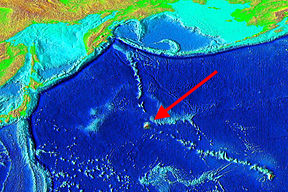
The island of Ochay was formed as a part of the Emperor-Hawaiian seamount chain, specifically what the Japanese called the Daikakuji Volcano - the present Mount Ebbott - somewhere around 45 million years ago. The island forms the crux of the L-shape of the Emperor-Hawaiian seamount chain, terminated in the north by the Kamchatka Penninsula and in the west by the island of Hawai'i. For centuries, the ring of shallow rocky barrier formation around the island, as well as the island's relative isolation from other land meant that the island was relatively untouched by humans until the 18th century. In the absence of human presence, the subtropic climate fostered a rich ecology that still thrives to this day.
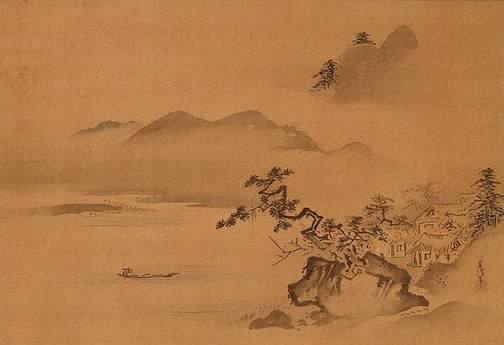
Owing to the then-Japanese isolationist policy of Sakoku, Japan had little interest in maintaining an empire of foreign land assets. Thusly, the colonization of Ochay - or as the Japanese knew it, Daikakuji Jima - was not primarily a project of imperial conquest, but instead an ad-hoc project by Japanese fishermen to tap into the fertile fishing seas around Ochay. The first fishermen to set foot on the island arrived in the summer of 1711. They would return to mainland Japan at the conclusion of the fishing season, but in the 1719 season, permanent settlement would begin in earnest. The denizens of this village had humble ambitions, and as such it never outgrew it's initial name - Gyoson, or simply 'Fishing Village'. Gyoson would slowly grow over time, and apart from infrequent excursions the people there would mainly keep to the rich Gyoson Bay and the surrounding waters.
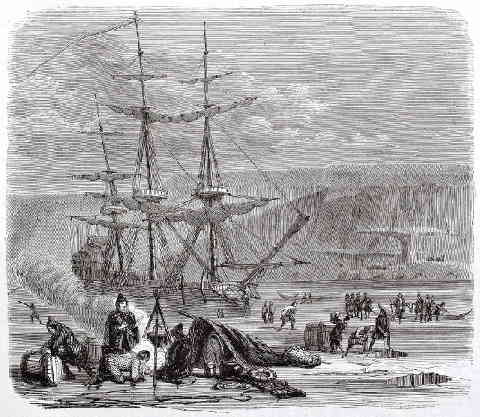
As European colonization of the Pacific Northwest began to increase in scale and producitivity in the late 18th and early 19th centuries, a trade network began to form between the Pacific Northwest, China, and the European metropoles. The Hawaiian Islands, being situated near the middle of the Pacific ocean, offered a convienent stopover for trade ships to winter. This situated Ochay in a convienent location for said trade ships to make excursions to during the winters. The fishing core of Gyoson had little interest in the arrival of these ships, but a small but growing class of traders and merchants found an oppertunity. Noting the lack of interest on the part of the Shogunate of the goings-on of Daikakuji Jima, a number of American and Japanese merchants began a smuggling operation, getting foreign goods in and Japanese goods out through the many fishing vessels traversing the waters between the island and the Japanese Mainland.
This would culminate in the American Fur Company founding Port John Jacob Astor - the present town of Astor - on the south side of the island in 1819 to recieve trade vessels and conduct business with the Japanese on the northeast side of the island. Port J.J. Astor, having to hide itself from the sometimes-present Shogunate authorities, would quickly grow a reputation as a place of last refuge for the many scoundrels, cheats, and ne'er-do-wells that populated the Pacific Ocean. Conversely, the port also became known as a hub of freedom and liberty, away from the prying eyes of most everyone else - save the AFC's company men, who tolerated most people's presences, provided they paid their dues every month. Some in the May Revolution cited Port J.J. Astor as an inspiration for the kind of society that the island could foster.
Coinciding with the general downward trend of the maritime fur trade, shipments to and from Daikakuji Jima began to steadily decline in the 30s and 40s, until the American Fur Company fully withdrew from Port J.J. Astor in 1849. This was only five years before the end of Sakoku and the opening of Japan with Commodore Perry's expedition and the signing of the Convention of Kanagawa. With said convention, American ships were able to dock in and trade with select Japanese ports, rendering the smuggling route through Daikakuji Jima useless. A few stragglers would continue to populate the port, but most former denizens would head back to America or assimilate into Gyoson, which had largely continued it's profitable fishing industry through the decades. The island would glide back into being not very noteworthy for the next few decades, as the imperial powers generally had their focus elsewhere.
The island would return to a vague sense of relevance on the onset of the Russo-Japanese War in 1904, as Russian war planners thought that the seizure of the underpopulated island could benefit Russian maritime trade and naval operations along with the reinforcement of Port Arthur. They knew of the shipping capabilities of the island, as a decent number of Russian traders had filtered through Port J.J. Astor over it's years of operation and spread word back home. The war was much more of a slog than the Russians expected, and thus the Japanese were able to defend Daikakuji Jima from foreign seizure. The major impact of the Russo-Japanese War on the island was the expansion of the sleepy auxilary village of Reigen - named for the Japanese emperor that passed a few decades before colonization of the island - with a military base and fort. The base was well positioned to keep watch for enemies, both on land and on the sea. As Japan continued to descend into militarism and imperialism in the 20's and 30's, this military presence would continue to grow, a presence that the island would not shake, be it Japanese, Soviet, or American, until the May Revolution.
As the Japanese Empire began to turn it's imperial attention to the United States of America and it's colonial possesions, it realized that Daikakuji Jima would be an essential piece of infrastructure in projecting power more east, and so millions upon millions of dollars began to flow into a naval base project on the western coast of the island - Reigen's port was proving too shallow for the larger vessels the IJN was trying to move into it. The project commenced in 1940, and was frought with problems for it's entire lifespan. The barrier rock clusters needed to be dealt with, the cliffs were too steep at the chosen location for the port, there was graft and corruption at every step of construction, and so on. By the island was invaded, it still wasn't even close to completion.
Due to the relative isolation of Daikakuji Jima from other more pressing targets, the United States' strategy of island hopping to eliminate Japanese influence in the Pacific didn't reach the island until late into the war, in early August. Even as US command thought the atomic bombings to be a sure-fire route to Japanese capitulation, they still wanted assurance if a surrender was denied and Operation Overlord had to be instituted. Thus, on August 5th, 1945, US troops in a midnight raid landed in what once was Port J.J. Astor and began moving to take over the island and assault the military base in Reigen, and the under-construction port on the coast. This was complicated by the Soviet entrance to the Pacific Theater on August 9th, where Soviet planners - like their Russian counterparts four decades prior - realized the utility of a pacific holding, and moved the Red Navy to shell the western port and storm it with marines on the 10th, naming it Point Rezanov, after the staunch promoter of Russian colonization in the Pacific in the 18th and 19th centuries. The two armies met eachother only a few hours afterwards, and prepared a final assault to rid the island of the Japanese. This assault, however, would never be ordered, as the Japanese unconditionally surrendered on the 15th.
The Ochayan Imperial Period (1945-1983)